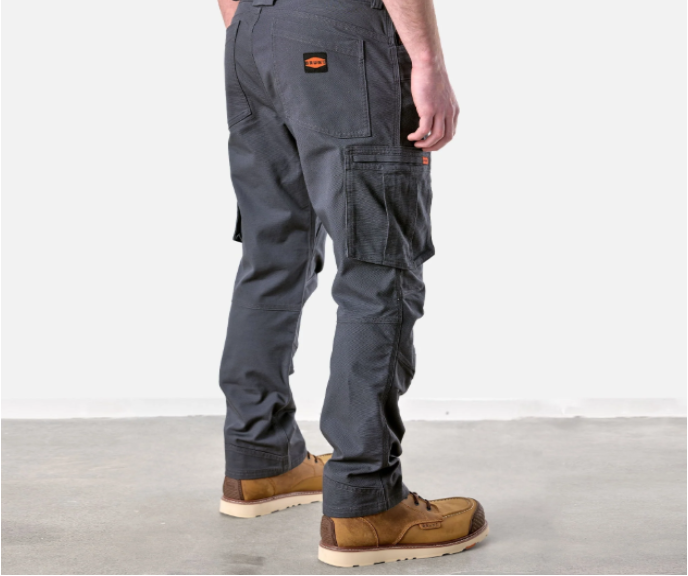
Nobody buys bad workwear on purpose. The decision usually makes sense at the time — the cut looks right, the pocket count seems adequate, the fabric feels solid enough in the shop. Then the pants go on site and the story changes. Seams that were held in the changing room open under the first serious crouch. Pockets that seemed deep enough lose fittings within a week. The zip housing separates from the fly panel on day twelve.Men’s cargo work pants built for genuine site use are designed around failure points that brands who have never watched a tradesperson work all day simply do not know how to address.
The Inner Thigh Failure Nobody Anticipates
Most workwear fails fastest somewhere the buyer never checked in the shop. The inner thigh is where fabric wears through first on workers who climb, squat repeatedly, or move between levels throughout the day. The friction is constant and largely invisible until a worn patch appears. Work-specific pants account for this with gussets — diamond or action gussets cut into the crotch seam — that change the geometry of how the fabric distributes tension across the leg. Without a gusset, every deep squat puts the same seam under the same stress in the same spot, repeatedly, until it gives. That failure is not bad luck. It is geometry.
What Happens to Zip Housing Under Load
Zip failures on work pants are almost never the zip itself. The zip is usually fine. What fails is the attachment — the way the zip housing is stitched to the surrounding fabric, which on cheaper garments uses insufficient stitch density at a junction that takes constant flex and occasional snagging force. A tradesperson opening and closing their fly pocket dozens of times across a shift while wearing a tool belt is putting lateral stress on that junction that standard stitch patterns were not designed for. The housing pulls. The fabric tunnels. The zip still works and the pocket is now useless. Brands that understand this stitch the housing attachment differently, and it is one of the clearest indicators of whether a work pant was designed by people who actually know what a work day involves.
Why Colour Affects Site Safety More Than Style
This is rarely discussed as a functional consideration, but it matters. Darker work pants absorb heat significantly faster in direct sun, and workers in exposed environments — roofing, civil construction, outdoor maintenance — who wear black or charcoal work pants in summer are carrying a thermal load that lighter-coloured garments do not impose. Beyond temperature, high-visibility panels or contrasting trims on work pants serve a genuine safety function on sites with moving plant or vehicle traffic. Men’s cargo work pants available only in dark colourways are making a style decision that quietly becomes a comfort and safety trade-off for the workers wearing them on exposed sites through the warmer months.
The Cuff Problem in Wet Conditions
Standard hem cuffs on work pants collect water in wet conditions and hold it against the boot shaft, which wicks moisture upward into the sock. Workers who spend time in rain, dew-covered grass, or wet concrete know this pattern well. Tapered cuffs that sit closer to the boot reduce the collection point. Unfinished or raw hem options that riders above the boot entirely prevent the problem. Men’s cargo work pants with adjustable hem systems — drawcord cuffs or snap closures that can be tightened around a boot — address wet-condition comfort in a way that never appears on a features list but matters intensely to anyone who has spent a full day with wet feet because the hem of their pants channelled rain directly into their boots.
When Washing Reveals Construction Honesty
New work pants lie. They sit straight, hold their shape, and the pockets look crisp. After several washes the truth appears — waistbands that were stiffened with interfacing that shrinks differently from the outer fabric, pocket bags that pucker and pull, knee panels that shift off-centre. Construction that survives repeated washing without distorting is construction where the materials were matched for compatibility, not just assembled to look correct on the shop floor.
Conclusion
Men’s cargo work pants that genuinely outlast site conditions are built around failure points most buyers never think to check — gusset geometry, zip housing attachment, cuff behaviour in wet conditions, and construction that holds its shape through months of hard washing. The difference between a pair that lasts a season and one that lasts years is almost never visible on the day of purchase. It shows up slowly, consistently, in the details that reward the workers who knew to look for them.